

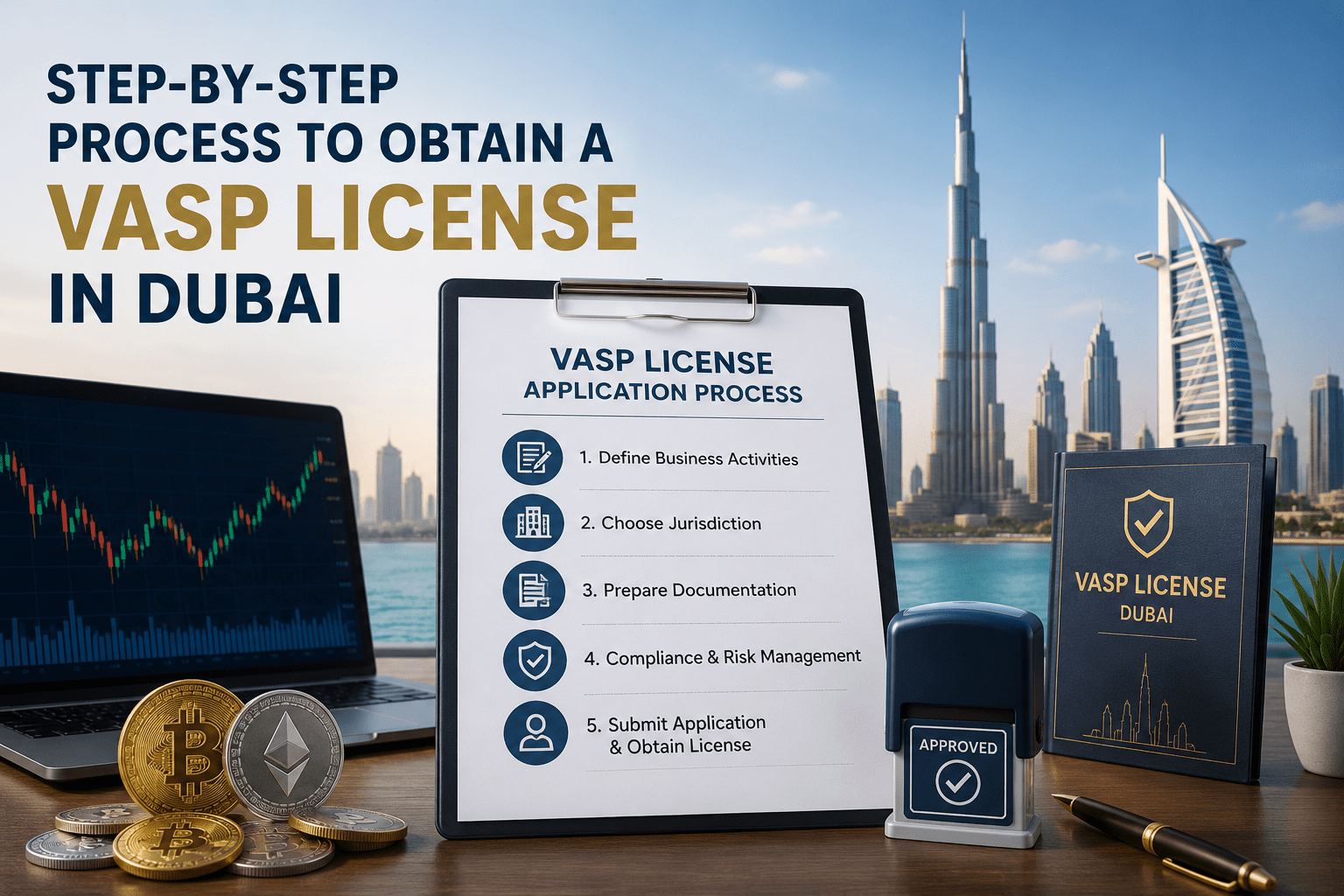
Dubai has established itself as one of the world’s leading destinations for virtual asset businesses. With a dedicated regulatory framework, supportive business environment, and growing blockchain ecosystem, the city continues to attract cryptocurrency exchanges, wallet providers, token issuers, and other digital asset companies from around the world. Businesses that want to operate legally in this market must obtain a VASP license in Dubai before offering regulated virtual asset services.
The licensing process may appear complex at first, but it becomes much easier when approached in a structured manner. Every stage, from selecting the right business activity to preparing compliance documents and obtaining regulatory approval, plays an important role in building a legally compliant business.
This guide explains the complete step-by-step process to obtain a VASP license in Dubai, helping entrepreneurs and investors understand what to expect before launching a virtual asset company.
What Is a VASP License?
A Virtual Asset Service Provider (VASP) license authorizes businesses to provide regulated services involving virtual assets. These services may include cryptocurrency exchange operations, brokerage, custody, virtual asset transfers, lending, advisory services, and other approved activities.
The purpose of licensing is to create a secure and transparent virtual asset market while protecting investors, reducing financial crime, and ensuring businesses follow international compliance standards.
Holding a VASP license demonstrates that a company operates within Dubai’s legal framework and meets regulatory expectations regarding governance, risk management, and customer protection.
Why Is a VASP License Important?
Operating without the appropriate license can expose a business to legal risks, regulatory penalties, and reputational damage. A licensed company enjoys greater credibility among investors, institutional clients, banking partners, and customers.
A licensed business can also benefit from:
- Higher customer confidence
- Stronger relationships with financial institutions
- Better access to investors
- Long-term business stability
- Compliance with international regulatory expectations
For companies planning to expand globally, regulatory compliance in Dubai also creates a strong foundation for future growth.
Step-by-Step Process to Obtain a VASP License in Dubai
Step 1: Define Your Virtual Asset Business Activities
The first step is identifying exactly which virtual asset services your company intends to provide. Different business models may require different regulatory approvals and compliance requirements.
Examples include:
- Cryptocurrency exchange
- Broker-dealer services
- Custody services
- Virtual asset lending
- Advisory services
- Asset management
- Transfer and settlement services
Clearly defining your business activities helps determine the licensing pathway and documentation required during the application process.
Many businesses underestimate the importance of this stage. Choosing the wrong activity or failing to describe services accurately can delay the licensing process or require amendments later.
Step 2: Select the Appropriate Business Jurisdiction
Dubai offers several business setup options, each with its own legal and operational structure. Selecting the right jurisdiction is an important strategic decision because it influences licensing procedures, operational flexibility, taxation, and future expansion plans.
Factors that should be evaluated include:
- Nature of the virtual asset services
- Ownership structure
- Office requirements
- Future fundraising plans
- International expansion strategy
A proper assessment at this stage helps prevent unnecessary restructuring after the business becomes operational.
Step 3: Develop a Comprehensive Business Plan
Regulators expect applicants to demonstrate that the proposed business has a sustainable operating model and understands the risks involved in virtual asset services.
A strong business plan should explain:
Business Objectives
Describe what the company intends to achieve, the services it will provide, and the markets it plans to serve.
Revenue Model
Explain how the business will generate income while remaining compliant with applicable regulations.
Operational Structure
Outline management responsibilities, staffing plans, internal reporting, and decision-making processes.
Risk Management Strategy
Demonstrate how operational, financial, cybersecurity, and compliance risks will be identified and managed.
A detailed business plan reflects preparedness and gives regulators confidence that the company understands its responsibilities.
Step 4: Prepare Corporate Documentation
The next stage involves preparing the legal documents required for company formation and licensing.
Typical documentation may include:
- Company incorporation documents
- Shareholder information
- Director information
- Ultimate beneficial owner details
- Corporate governance structure
- Office lease documentation
- Organizational chart
Every document should be accurate, complete, and consistent with the information provided throughout the application.
Even small discrepancies can result in requests for clarification, which may extend the approval timeline.
Step 5: Build a Strong Compliance Framework
Compliance is one of the most important parts of obtaining a VASP license in Dubai. Regulators expect companies to establish effective internal controls before beginning operations.
Your compliance framework should address several important areas.
Anti-Money Laundering Policies
The company should establish procedures for identifying suspicious activities, monitoring transactions, and reporting regulatory concerns.
Know Your Customer Procedures
Customer verification procedures help ensure the business understands who is using its services and reduces the risk of fraudulent activities.
Risk Assessment
The company should regularly evaluate operational risks, financial risks, cybersecurity threats, and customer-related risks.
Record Keeping
Businesses should maintain organized records for transactions, customer verification, compliance activities, and regulatory reporting.
Developing these systems early demonstrates that compliance is integrated into daily operations rather than treated as an afterthought.
Step 6: Establish Technology and Cybersecurity Controls
Virtual asset businesses rely heavily on secure technology infrastructure. Protecting customer information and digital assets is essential for regulatory compliance and business credibility.
Companies should implement appropriate security measures such as:
- Secure wallet management
- Multi-factor authentication
- Data encryption
- Access controls
- System monitoring
- Backup and disaster recovery procedures
Technology systems should be capable of supporting compliance monitoring while protecting sensitive customer information from cyber threats.
Step 7: Submit the VASP License Application
Once all documentation has been prepared, the formal application can be submitted to the relevant authority.
The application generally includes:
- Business plan
- Corporate documents
- Compliance policies
- Risk management framework
- Technology overview
- Shareholder information
- Financial information
- Required declarations
Providing complete and organized documentation helps reduce unnecessary delays during the review process.
Step 8: Respond to Regulatory Review
After submission, regulators conduct a detailed review of the application. During this stage, additional questions or requests for supporting documents may arise.
Applicants should respond promptly and provide accurate information whenever requested.
The review process is designed to evaluate:
Financial Stability
Regulators assess whether the business has sufficient financial resources to operate responsibly.
Management Competence
Directors and senior management should demonstrate appropriate experience, integrity, and understanding of regulatory responsibilities.
Operational Readiness
Authorities evaluate whether the company is capable of delivering services safely while protecting customers and maintaining compliance.
Maintaining open communication throughout this stage contributes to a smoother licensing experience.
Step 9: Meet Operational Readiness Requirements
Before receiving final authorization, businesses may need to demonstrate that their internal systems are fully operational.
This can include:
- Compliance procedures
- Employee training
- Risk monitoring systems
- Customer onboarding processes
- Transaction monitoring
- Internal reporting mechanisms
Operational readiness confirms that the business is prepared to begin offering services in accordance with regulatory requirements.
Step 10: Obtain the VASP License and Begin Operations
Once the regulator is satisfied that all requirements have been met, the company receives approval to operate as a licensed Virtual Asset Service Provider.
However, licensing is not the end of the compliance journey.
Licensed businesses are expected to maintain ongoing compliance through regular reporting, internal audits, employee training, policy updates, and continuous monitoring of regulatory developments.
Maintaining high compliance standards helps protect both the business and its customers over the long term.
Common Challenges During the Licensing Process
Although Dubai offers a well-defined licensing framework, applicants often encounter challenges because of incomplete preparation rather than regulatory complexity.
Some of the most common issues include:
Incomplete Documentation
Missing or inconsistent information remains one of the leading causes of application delays.
Weak Compliance Policies
Generic compliance documents that are not tailored to the company’s operations may not satisfy regulatory expectations.
Poor Business Planning
A business plan lacking financial projections, operational details, or risk management strategies can lead to additional review requests.
Technology Gaps
Virtual asset businesses must demonstrate that their technology infrastructure supports security, customer protection, and regulatory compliance.
Preparing thoroughly before submission significantly improves the likelihood of a smoother licensing process.
How Long Does It Take to Obtain a VASP License in Dubai?
The licensing timeline varies depending on several factors, including the complexity of the business model, the quality of the submitted documentation, the responsiveness of the applicant, and the regulatory review process.
Businesses that submit complete applications with well-prepared compliance frameworks generally experience a more efficient review process than those requiring multiple revisions.
Working with experienced legal and regulatory professionals can also help reduce delays by ensuring that documentation aligns with current regulatory expectations.
Why Professional Guidance Makes the Process Easier
Obtaining a VASP license in Dubai involves legal, regulatory, compliance, and operational considerations that require careful planning. Every decision made during the application process can influence approval timelines and future business operations.
Professional advisors can assist with business structuring, regulatory interpretation, document preparation, compliance policies, governance frameworks, and communication with the relevant authorities. Their guidance helps businesses avoid common mistakes while improving the overall quality of the application.
For international entrepreneurs who may not be familiar with Dubai’s regulatory landscape, experienced legal support can provide valuable clarity throughout the licensing journey.
Conclusion
Dubai continues to strengthen its position as a global hub for virtual assets by offering a clear regulatory framework that promotes innovation while maintaining strong investor protection. Businesses that want to operate in this rapidly growing sector must follow the correct licensing process and establish robust compliance systems from the very beginning.
Obtaining a VASP license in Dubai involves much more than completing an application. It requires careful planning, a well-defined business model, comprehensive compliance procedures, secure technology infrastructure, and ongoing regulatory commitment. Companies that approach the process with proper preparation are better positioned to secure approval, build customer trust, and achieve sustainable growth in the competitive virtual asset market.
Whether you are launching a cryptocurrency exchange, custody platform, brokerage, or another regulated virtual asset business, investing time in understanding the licensing process today can help create a stronger and more successful business for the future.
Frequently Asked Questions
Who needs a VASP license in Dubai?
Any business that intends to provide regulated virtual asset services, such as cryptocurrency exchange, custody, brokerage, advisory, or transfer services, generally requires a VASP license before commencing operations.
Can foreign investors obtain a VASP license in Dubai?
Yes. Foreign investors can establish virtual asset businesses in Dubai, provided they comply with the applicable business formation and licensing requirements.
Is compliance required after obtaining the license?
Yes. Licensed businesses must continue meeting regulatory obligations through ongoing compliance monitoring, reporting, customer due diligence, record keeping, and internal governance.
What documents are commonly required for a VASP license application?
The application typically includes company formation documents, shareholder information, business plans, compliance policies, governance documents, financial information, and technology-related documentation.
Why should businesses seek legal assistance during the licensing process?
Professional legal guidance helps businesses prepare accurate documentation, build effective compliance frameworks, reduce regulatory risks, and improve the efficiency of the licensing process.
