

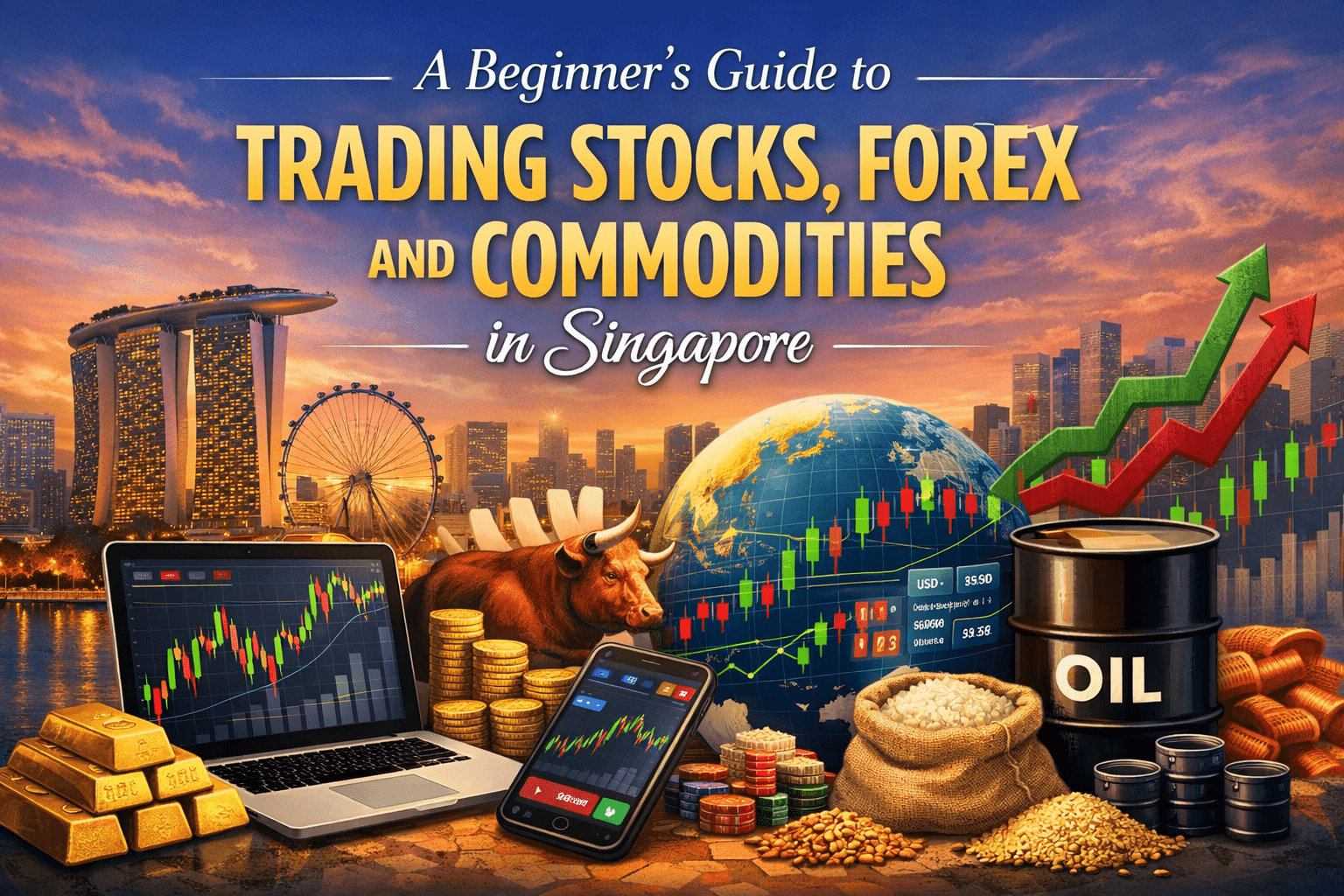
Stepping into the world of trading can feel intimidating at first. New traders are often faced with fast-moving charts, unfamiliar terminology, and an overwhelming amount of advice that promises quick success. In Singapore, however, trading has become increasingly accessible and well-regulated, making it an attractive environment for beginners who want to learn responsibly. With the right mindset and a clear understanding of the basics, trading can evolve from something confusing into a structured and empowering financial skill.
This guide is written for beginners who want a practical, grounded introduction to trading stocks, forex, and commodities in Singapore. Rather than focusing on hype or shortcuts, it aims to build understanding, confidence, and realistic expectations.
The Trading Environment in Singapore
Singapore is widely recognised as one of Asia’s leading financial centres. Its strong regulatory framework, political stability, and advanced financial infrastructure make it a trusted location for both local and international traders. For beginners, this translates into a safer learning environment with access to global markets, modern trading platforms, and clear investor protections.
That said, regulation does not eliminate risk. All trading involves uncertainty, and losses are part of the learning process. Understanding this early helps beginners approach trading with patience rather than unrealistic expectations. Trading should be viewed as a skill developed over time, not a guaranteed source of income.
Stock Trading: Learning Through Ownership
Stock trading is often the starting point for many beginners. When you buy a stock, you are purchasing a share in a company, meaning your performance is tied to that business’s success, reputation, and financial health. In Singapore, traders can invest in both local companies and international corporations listed on overseas exchanges.
Stocks are appealing because they are linked to real-world businesses with publicly available information. Beginners can learn how to analyse company earnings, follow industry trends, and understand how news impacts share prices. This makes stock trading a valuable educational entry point into the broader financial markets.
However, stock prices can be volatile, especially during periods of economic uncertainty. New traders benefit from focusing on long-term understanding rather than short-term speculation, while learning how diversification and risk control help protect capital.
Forex Trading: Understanding Global Currency Movements
Forex trading involves exchanging one currency for another, aiming to profit from changes in exchange rates. It is the largest and most liquid financial market in the world, operating around the clock during the trading week.
While forex offers flexibility and frequent trading opportunities, it also comes with higher complexity. Interest rates, inflation, economic data, and geopolitical events influence currency values. Many forex traders use leverage, which increases exposure and amplifies both gains and losses.
For beginners in Singapore, education is critical when approaching forex trading. Understanding how currency pairs work, how leverage affects risk, and why economic announcements move markets is far more important than chasing rapid profits. A careful, informed approach helps beginners avoid costly mistakes early on.
Commodities Trading: Exposure to Global Supply and Demand
Commodities trading focuses on raw materials such as gold, oil, silver, and agricultural products. These markets are driven by supply and demand, production levels, weather conditions, and global economic activity.
Commodities can behave differently from stocks and currencies, which makes them useful for diversification. For example, gold is often seen as a store of value during times of uncertainty, while oil prices react strongly to geopolitical events and changes in global demand.
Beginners should take time to understand the specific factors that influence each commodity before trading. Unlike stocks, commodities do not represent ownership in a company, so their price movements are tied closely to external forces rather than business performance.
Selecting a Trading Platform That Supports Learning
Choosing the right trading platform is one of the most important decisions a beginner can make. A suitable platform should provide transparency, access to multiple markets, educational resources, and effective risk management tools. It should support learning, not encourage reckless trading behaviour.
For those exploring global markets and professional trading tools, using a well-established platform can make the learning process more structured. Beginners looking to understand what such platforms offer can click to learn more. Having the right tools in place allows traders to focus on developing skills rather than navigating unnecessary obstacles.
Conclusion: Building a Strong Foundation for the Long Term
Trading stocks, forex, and commodities in Singapore offers meaningful opportunities for those willing to approach the markets with care and commitment. While each market has its own characteristics, all of them reward preparation, patience, and disciplined decision-making.
For beginners, success is not measured by how quickly profits are made, but by how well knowledge and confidence are built over time. By focusing on education, choosing supportive tools, and managing risk responsibly, trading can become a valuable long-term skill rather than a source of unnecessary stress. With the right foundation, beginners can move forward with clarity and confidence as they continue their trading journey.
